
Do we need to know how Generative Artificial Intelligence (GenAI) works? Do we even need to care?
We rarely question how technology works in our daily lives. We heat and cool our food in appliances as standard fare to modern living. We send and receive text messages with friends and loved ones. We traffic to and fro each day in our vehicles of choice. All the while we blindly trust that some empowered group of people have blessed the technology we use for convenience, conveyance, and livelihood.
We have grown complacent to the fact that safety manuals and usage guidelines have long been written in blood and edited in lost lives. We go about our lives rarely glimpsing the quiet updates made on this discovery or that danger. We chalk this up to the formulaic conventions of progress.
Progress is a Risky Business
History is filled with revolutionary human inventions and discoveries that fail to fully comprehend its consequences or underlying principles. These breakthroughs often led to significant advancements or shifts in human society, science, and technology.
- Atomic Bomb and Nuclear Energy: The development of nuclear weapons during World War II, particularly the atomic bomb, is a prime example. Scientists, including those involved in the Manhattan Project, had theoretical discussions about the possibility of an atomic bomb igniting the Earth’s atmosphere. Although calculations indicated this was unlikely, the full implications of nuclear fission and the long-term effects of radiation were not entirely understood at the time.
- Penicillin and Antibiotics: The discovery of penicillin by Alexander Fleming in 1928 revolutionized medicine by introducing the age of antibiotics. However, the underlying mechanisms of how antibiotics worked were not fully understood for years, and the potential for antibiotic resistance was not initially anticipated.
- X-Rays: Discovered by Wilhelm Conrad Röntgen in 1895, X-rays were an accidental discovery that quickly found applications in medicine for imaging bones. However, the risks associated with radiation exposure, including cancer and other health issues, were not well understood for decades.
- The Internet: Initially developed as a way to share information between computers over long distances, the full potential and implications of the internet were not fully grasped in its early stages. The profound impact on commerce, communication, privacy, and even politics was largely unforeseen.
- CRISPR-Cas9 and Gene Editing: The discovery of CRISPR-Cas9 as a tool for gene editing has opened up new frontiers in genetics, medicine, and biotechnology. While its potential for treating genetic diseases is enormous, the ethical implications, long-term effects, and unintended consequences of editing the human genome are still being explored and understood.
These are a few examples that highlight the dominant pattern of human innovation where the drive to explore and create can lead to discoveries that outpace our understanding of their implications. Yes, each of these advancements has led to further inquiry, helping to fill the gaps in our knowledge and understanding, albeit sometimes after significant consequences or ethical dilemmas have emerged.
Even Incrementalism Fails the Test
Even when considering incremental discoveries such as new drugs, supposedly carefully monitored progress misses key risks. The Food and Drug Administration (FDA), an agency responsible for safety and oversight of key aspects of American health, has issued more than 14,000 drug recalls in the last 10 years (as of March, 2023), according to Harvard Medical School.
Balancing Progress and Its Perils
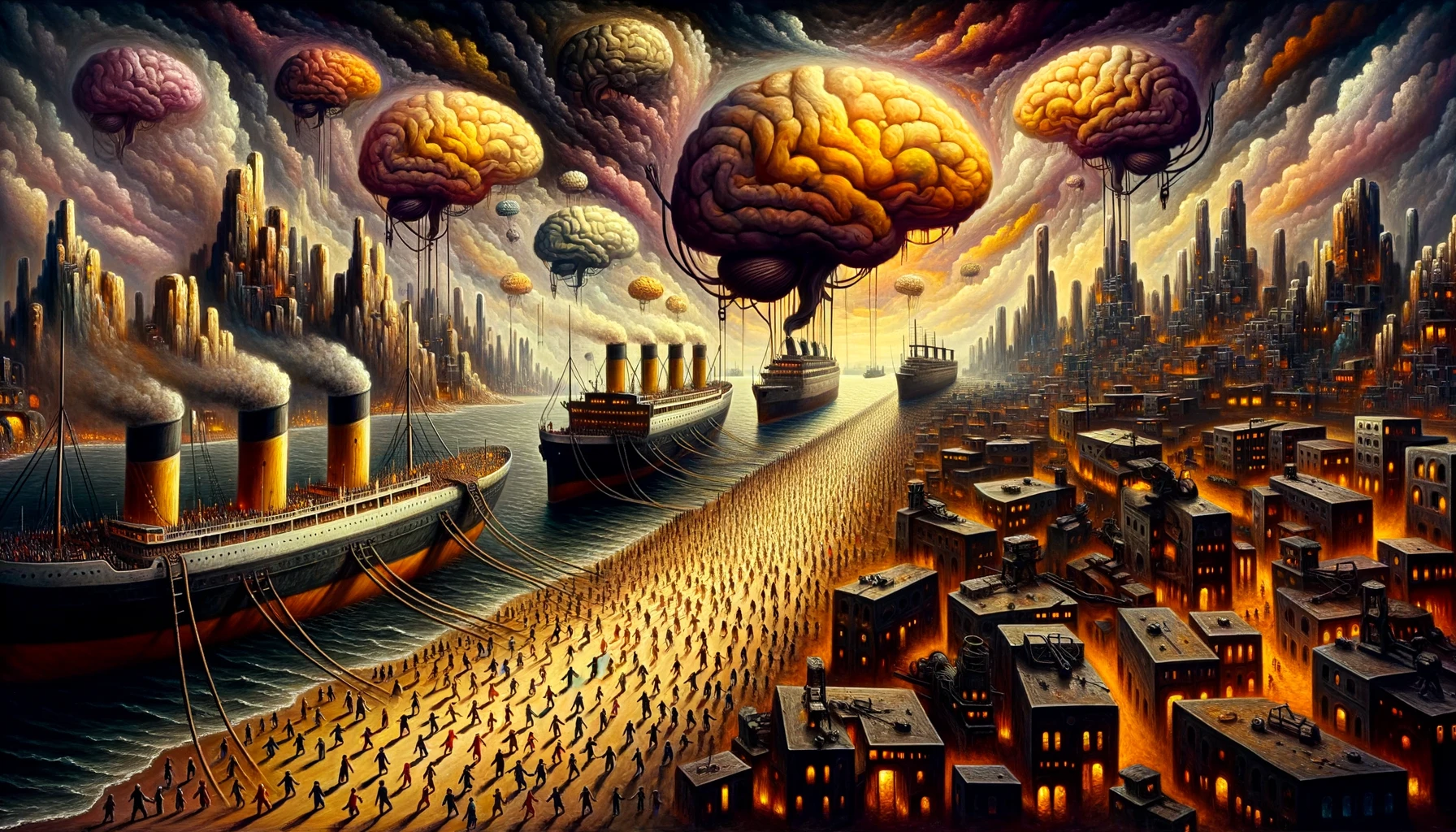
While AI, itself, was birthed years ago, it was the recent advent of GenAI that brought a spotlight to this question of “How does AI even work?” Many marveled at and wondered about how closely the outputs resembled human intelligence. It was notable how mindshare diverged sharply between belief of progress and those seeing its perilous outcomes.
On one hand, GenAI provided nearly immediate applications. On the other hand, the questions began to swirl about who could and would control this new force. Governmental bodies started more aggressively attempting to legislate, while corporations postured to take maximum advantage of the coming wave.
Yet, for all we have learned about GenAI and its makers in the past year, much remains a mystery. Even scientists credited with ‘creating’ GenAI really have simply discovered a novel way in which to apply neural networks which still aren’t fully understood.
Large language models (LLMs) like the ones that power ChatGPT and Bard are different from revolutionary technologies of the past in at least one striking way: No one—not even the people who built the models—knows exactly how they work. As tech companies race to improve and apply LLMs, researchers remain far from being able to explain or “interpret” the inner mechanics of these inscrutable “black boxes.”
Mark Sullivan, Fast Company
Do We Need to Know How GenAI Works?
Whether you like it or not, the genie is out of the bottle and wishes are being whispered.
Of course, I would feel better knowing how it really worked. But when leading experts can’t even understand it, where does that leave me and you?
Progress must be weighed against its perils.
I don’t know that we’ll ever know how it works. But we are striving to see how it helps us and how it hurts us. We push on both frontiers simultaneously, and our world will change.
Our journey to understand how a thing works is a way in which we cope with uncertainty. When we can’t understand how something works, nor trust those who certify its workings, most naturally tend to classify it as threat.
While it’s tempting to see the world ending, humans have an incredible knack for sensing impending doom and preserving the species. That is little consolation to the lives and livelihoods lost during transition.
Whether we understand how GenAI works is no longer a relevant question. Instead, we must move on to coping with how we can maximize progress while minimizing its perils. We have seen initial guardrails go up in a brittle attempt to stave off the inevitable disasters we will witness. And it is those disasters which we will learn the true cost of progress as well as how to move forward.
Our human existence has been carved out over our years like rushing water through a canyon of hard rock. What we see today is smooth lines and flowing water. But we have forgotten the many floods and steady grinding of river on rock over the years. Ours is but a glimpse in the moment in time.
Maybe the real question we must always ask is, “Where do we go from here?”
Additional Resources
I found these articles interesting during my writing:
- How Large Language Models Work by Andreas Stöffelbauer
- The frightening truth about AI chatbots: Nobody knows exactly how they work by Mark Sullivan


Leave a Reply